
Thrive Personal Fitness Springfield, MO Personal Trainer Pamela Hernandez is your guide on the journey to health and fitness. Personal training for weight loss in Springfield, MO.

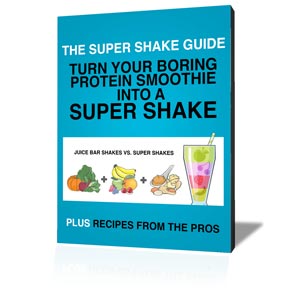
What a Personal Trainer Thinks About Shakes Ep 50

by Pamela | February 3rd, 2012

Personal Trainer Pamela Hernandez talks about the good and bad of protein shakes.

In this video is advice for:

  • Are protein shakes good for you?
  • When should you take a protein shake?
  • Are shakes the best way to achieve weight loss.

Subscribe in iTunes Subscribe in iTunes HD

If you enjoyed this article, please help me out by using one of the sharing buttons below!

The Winner of Best Personal Trainer 2012 in 417 is….

by Pamela | February 2nd, 2012

Not me.

It pains me somewhat to say that but in fact this year I was the Runner Up in the Best of 417 awards.

The Winner of Best Personal Trainer 2012 in 417 is....

Sure it’s disappointing but I’m actually proud of that runner up status. It reminds me of my senior seminar in political science. Dr. Connor was known as kind of a hard ass. A smart ass and a hard ass. The class grade was based on participation, a presentation and a paper. Even though it was an undergraduate paper, he treated it more like a master’s level thesis.  Planning of that paper and presentation started only a couple of weeks into the class and there were milestones that had to be met along the way to get full credit at the end. There was also lots of reading for the in class discussions.  It was one of the hardest classes I have ever taken.

I got a B in that class. I was really proud of that B too. I worked harder for that B than any A I had ever received.  That’s what made me so proud. I had given it my best effort and come out not on top but with some recognition for my hard work and some notes on where I could improve. I learned not just about the subject matter but about myself: what I was capable of and what areas I needed to improve.

This year’s contest affected me in the same way. The runner up status is recognition that I am proud of. It means that many of you believe in me, what I do and that I deserve the title of Best Personal Trainer in 417. But it also means there are many who don’t know me. They don’t know my own story of transformation and that I’ve walked a mile in their shoes. They don’t know how hard I work to give the best I can to each and every client.

Or perhaps they do know me but just don’t think I am the best. That means I need to step up my game. That means I need to continue to work harder and smarter, finding ways to give you what you need to achieve your fitness goals.

Let’s open the discussion here. My focus for 2012 is to be my best so I can bring out your best. I want that title again in 2013. Tell me what can I do better, what do you need from me to achieve your goals? How I can earn your vote for the Best Personal Trainer in 417 2013?

If you enjoyed this article, please help me out by using one of the sharing buttons below!

The Fit Truth: Diet Foods Won’t Make You Fit

by Pamela | January 30th, 2012

The last key to Real Fitness may be the most important one. It can be the one that separates those who lose a few lbs. from those who truly transform their bodies and their lives. It not only impacts how you look but how you feel.

The Fit Truth: Diet foods won’t make you fit.

The 4th Key to Real Fitness is Food Quality.

Last week we talked about quantity. Balancing calories in with calories out is important. But so is learning about the quality of the calories consumed. A donut and a chicken breast may both have 240 calories but you will feel a whole lot different after eating the chicken breast than you do after eating the donut.

The clients who are the most successful, who show the best results in fat loss (which is different then weight loss, remember?) are ones who take the time to learn about food. They aren’t afraid to clean out their cupboards and start over. They embrace the idea of lean protein and stop being scared of carbs. Fats are no longer a four letter word.

I do have clients who try to slide by with 100-calorie snack packs and frozen meals to hit their calorie goals. In the beginning they do okay.  If you’re making better choices (after all a 100 calorie pack of popcorn is better than a bag of potato chips) you will see some progress. But eventually that progress will slow and frustration will set in.

Meanwhile, my clients who are getting in touch with real food are talking about how much food they eat. They don’t feel hungry.  They feel good! They have more energy! Their kids are asking for seconds! They are saving money since they aren’t eating out 3-5 times a week. Eating real foods is a win-win for your health, waistline and wallet.

They also allow themselves to have an occasional treat. This is the real world after all. We all have birthdays to celebrate and vacations to enjoy. But they are honest with themselves about what a treat is: not an every day occurrence.  A treat is something to be enjoyed once a month or even once a year, like your grandma’s chocolate pie that she only makes at Christmas. A true treat then should be enjoyed and savored. It should not be a source of guilt nor should it be saved up for or paid for the next day. This is not a process of deprivation and starvation but balance and being real.

Your food quality action plan is:

  1. Educate yourself. If you don’t know foods that are good examples of protein, carbs and healthy fats pick up a copy of Nutrition For Dummies. I love the Dummies series of books because they break down potentially technical subjects into easy to understand chunks. Learn the basics.
  2. After you’ve got the basics, pick up a copy (or subscription) of Clean Eating Magazine. Every issue has a variety of recipes plus snack suggestions in their meal plan. In my opinion it is the best source of healthy recipes out there. You’ll get variety and the recipes change with the seasons.
  3. Do a cupboard cleanse. Out go the snack packs of cookies and crackers. Dump the diet soda down the drain.  Check condiments, sauces, cereals and breads for high fructose corn syrup. If HFCS is there, in the trash it goes.
  4. Make a list of the clean eating staples for your next grocery trip. Include non perishables like natural peanut butter, oats, beans, lentils, whole grain flours, frozen vegetables, quinoa, whole wheat pasta and green tea.
  5. Shop once a week with a list and a plan. Weekly because you’ll need to pick up at least some of the perishable items (like bananas and eggs).
  6. It’s okay to take short cuts. Buy things like baby carrots, pre cut fruits (in their own juice only) and single serving bags of raw almonds if it’s going to help you make time for things that really require prep.
  7. Again, this is a process. It will never be perfect. Just do the best you can, making the best choice available in any given situation.

So that’s it. Those are the 4 Keys to Real Fitness. They aren’t sexy or earth shattering. There’s no promise of an easy button or super fast weight loss. It is going to take some work.

But they are real. It’s not a “diet”, a road map to fleeting weight loss that leaves you as soon as you return to normal. It is the road to a new normal. It’s a transformation, slow and steady over time, to a life focused on living and not dieting. It just takes that first step to start this journey. Are you ready to say goodbye to the diets and take the brave first step to a new way of living?

See all articles in the series The Fit Truth.

If you enjoyed this article, please help me out by using one of the sharing buttons below!

Fitness Book Club: Willpower: Rediscovering the Greatest Human Strength

by Pamela | January 26th, 2012

Welcome to the first post from my new fitness book club!

It’s funny that as I write about the first discussion and book selection, I am struggling to stay away from the distraction of Twitter and Pinterest.  The irony is the first book up for discussion was Willpower: Rediscovering the Greatest Human Strength. The authors, Roy F. Baumeister and John Tierney, tackle the topic of self-control: where it comes from, why some people seem to have more than others and is it possible to strengthen it?

What could have been a rather dry subject was actually made quite entertaining. Baumeister is the researcher, in the clinical sense, of the pair and has plenty of experiments and studies to back up his primary conclusions: willpower is a real thing that can be conserved and strengthened. To help make sense of the research and figure out how to apply it in your own life, Tierney uses real world examples and real life situations.

My favorite chapter, for example, is his discussion of glucose levels and their impact on willpower. He uses a story of type 1 diabetic and comedian, Jim Turner, to illustrate the point. Jim recalls a nighttime episode of irrational thinking and near hallucinations to show how low blood glucose can take away our common sense and make us people that we aren’t normally.

I know this first hand. I too lack self control and rational thought when my blood glucose drops. (In case you didn’t know, I am also a type 1 diabetic.) I’ve been known to yank phone cords out of walls, break things and (although it’s been a long time) eat uncontrollably when my blood sugar dips far too low.  While most people don’t experience it to the extremes that Jim and I do, there is a lesson to be learned: to make rational thoughts and decisions the brain needs fuel. Let your glucose levels drop too low and you lack the ability to make good choices.

While this isn’t a fitness book, the authors do offer a pretty good weight maintenance plan that could also carry over to anyone trying to lose fat. I don’t want to give it away but I will give you a hint-it’s not about dieting.

If you’ve ever wondered how some people seem to quite smoking for good or stay dedicated to the gym with ease, this book is for you. There’s even a solution for my Twitter/Pinterest problem. It’s called RescueTime and I really need to look into it.

Thanks to everyone who joined the live Facebook discussion about this book. If you missed it all the questions and discussion are still there, just scroll back to January 19.

The next book for my fitness book club is The Blue Zones: Lessons for Living Longer From the People Who've Lived the Longest.  For me it’s not just about living longer but also about have the best quality in those years. From what I’ve read so far this book will help us do both. Look for the Facebook live discussion in March. Read along and join us!

If you enjoyed this article, please help me out by using one of the sharing buttons below!

The Fit Truth: Food Accountability

by Pamela | January 23rd, 2012

The Fit Truth: Food Accountabilityimage by o5com

Exercise alone won’t give you the body you want. You’ll feel better: have more energy, sleep better and move better. But you can’t out train a bad diet.

3500 calories equals 1 lb. In theory, you would need to eat 500 calories less per day to lose 1 lb. per week. This, however, assumes that people are only consuming the number of calories needed to maintain their weight. If you need 2000 calories to maintain your weight but average 3000 calories per day your 500 calorie reduction isn’t going to help you lose fat. You have to create a calorie deficit. In the example above, that person would need to reduce calorie consumption and increase activity to create a 1500 calorie deficit to see 1 lb. of weight loss per week.

Then there are the people who have bought into the diet industry’s starvation mantra and are actually eating too few calories to sustain a healthy metabolism. Without adequate fuel on a regular basis the body is going to act like a calorie sponge when a normal amount (or excessive amount) of calories are consumed.

The Fit Truth: People have no idea how much food they actually need nor do they have an accurate picture of how much they are really eating.

The 3rd Key to Real Fitness is food accountability with a food journal or meal plan.

After medical and lifestyle questionnaires the next assignment for all of my clients is a food journal. This lets me see which camp they fall into: too many calories or too few. (It also helps me understand the kinds of foods they are eating, but we will talk more about that next week.)

Would it surprise you to hear that most often they are eating too little instead of too much? When I tell people they need to eat more to lose fat they look at me somewhat blankly, like I grew another head or mysteriously started talking in a foreign language.

There are a lot of opinions on the actual importance of calories. But, based on my experience and observation, to lose fat you need to find that “sweet spot” for food intake. You need a caloric deficit to encourage your body to tap into its reserves. You also need enough coming in so that the body feels okay letting go, that it has enough to meet its needs so it can afford to use some of it’s stored resources.

So while I agree that all calories aren’t created equal they do still matter. To lose fat you need to create a plan to stay accountable to your calories.

To create food accountability, here are your action steps:

  • Get an estimate of your maintenance level calories. Use the calculator on my Tools (female calorie calculator or male calorie calculator) page to help you determine how many calories you need to maintain your current body weight at your current activity level.
  • Reduce that number by 20-25%. This is your target. Remember this is an estimate. You may, depending on results, need to adjust this amount. Also, rule of thumb, don’t let your calorie goal go below 1200 if you’re female or 1800 if you’re male.
  • Pick a tool for your food log. It can be a notebook, spreadsheet, web site or app. It doesn’t matter as long as it works for you. This means you may need to experiment to find the right method.
  • If you’re more of a planner, then choose a meal plan instead of log. A meal plan is more like a budget. If you have 1600 calories to spend, planning a budget for the day makes sure you get what you need by the end of the day-no more and no less. It also gives you a blueprint for the day so you don’t have to think, just do.
  • Accept that no method is perfect. There is always going to be a margin of error and there may be gaps. Do your best and be consistent. It will pay off!

Remember how I said all calories aren’t created equal? Tune in next week for the 4th and final key-Quality Matters.

See all articles in the series The Fit Truth.

If you enjoyed this article, please help me out by using one of the sharing buttons below!